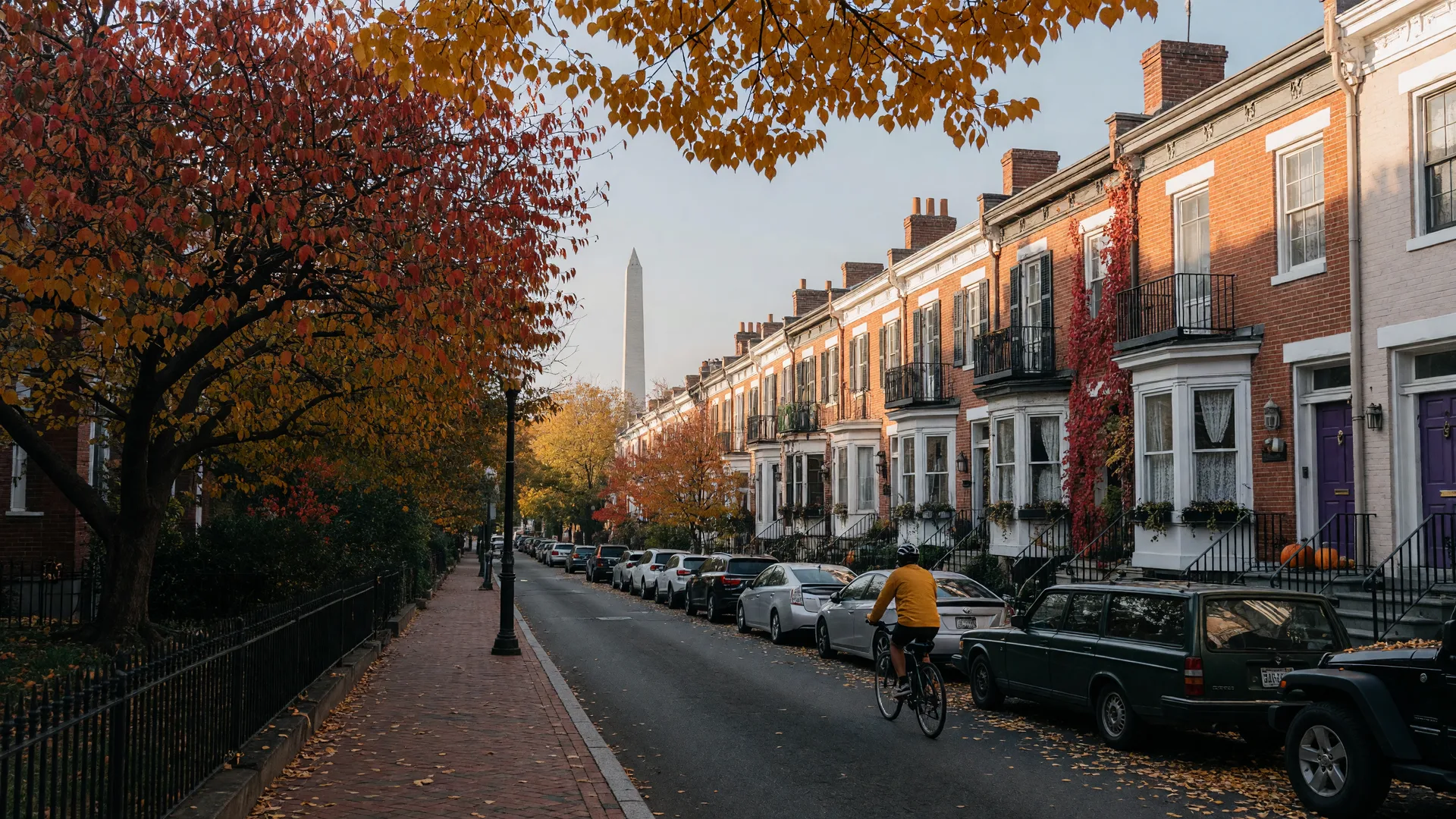
Key Takeaways
- Georgetown's median sale price was about $1.7 million for the three months ending August 2026, up 7.6% year over year (Redfin), with homes averaging near $901 per square foot.
- Inventory is thin. Roughly 88 homes sold in Georgetown over that three-month stretch, and only six Georgetown homes closed in September 2026, about $9.3 million total (The Georgetowner).
- The pace splits by pricing. Average days on market was 37, down from 42 a year earlier (Redfin), while well-priced homes have gone to pending in about 14 days (Zillow).
- Zillow's average home value for Georgetown was about $1.51 million in June 2026, up 2.3% year over year, a steadier read than the sale medians.
- Georgetown is one neighborhood inside Washington, DC (ZIP 20007), not one market. The East Village, West Village, N Street NW lanes, and the waterfront each move on their own block-level comps.
Is the Georgetown, DC real estate market cooling in 2026? The price data says no, and the pace says maybe. Georgetown's median sale price ran near $1.7 million over the three months ending August 2026, up 7.6% year over year (Redfin), yet average days on market of 37 tells a slower, pickier story than the price tags suggest. This guide breaks down the Georgetown DC real estate market this fall, block by block, and what it means for buyers and sellers.
Where the Georgetown DC Real Estate Market Fits the Region
Start with the region. The broader DC Metro is cooling in sales volume while prices hold: August closed sales fell 9.2% year over year to 3,872 (Bright MLS), and the 30-year fixed mortgage averaged 7.28% in the first week of October (Freddie Mac). Georgetown sits well above all of that noise. The citywide DC median sale price was about $684,000 in mid-2026 (Redfin), so Georgetown's roughly $1.7 million median runs about two and a half times the city average.
Georgetown also draws a different buyer pool than the rest of DC. Embassy families, Georgetown University faculty and parents, luxury downsizers, and out-of-state buyers who want a landmark address are less rate-sensitive than first-time buyers, which is why the neighborhood holds up when the rest of the region slows. For the full regional picture across DC, Montgomery County, Fairfax County, and the city of Alexandria, my county-by-county market analysis explains which jurisdiction is moving and why, and the October 2026 market update recaps the latest numbers.
What Homes Cost in Georgetown in 2026
Three sources tell the same story with different microphones. Redfin put Georgetown's median sale price near $1.7 million for the three months ending August 2026, up 7.6% year over year, or roughly $901 per square foot. Zillow's average home value came in at about $1.51 million in June 2026, up 2.3% year over year. Realtor.com's February snapshot showed about 84 homes on the market with a median list price of $1.945 million. All three point the same direction: prices are firm, supply is scarce, and the entry bar is high.
What that buys depends on the street. Condominiums and smaller rowhouse flats start well below the median, often between $700,000 and $1.2 million, especially toward the eastern edge of the neighborhood near the Dupont Circle line. Classic Federal and Victorian rowhouses on N Street NW, P Street, and the side lanes between Wisconsin Avenue and Rock Creek Park run from $1.5 million well past $4 million, depending on condition, renovation depth, and parking. Landmark estates along the C&O Canal and the Georgetown waterfront trade in the eight figures when they surface, which is rare. Condo buyers should also factor monthly association fees, which run higher in Georgetown's older boutique buildings and waterfront conversions than in newer high-rise corridors like Navy Yard.
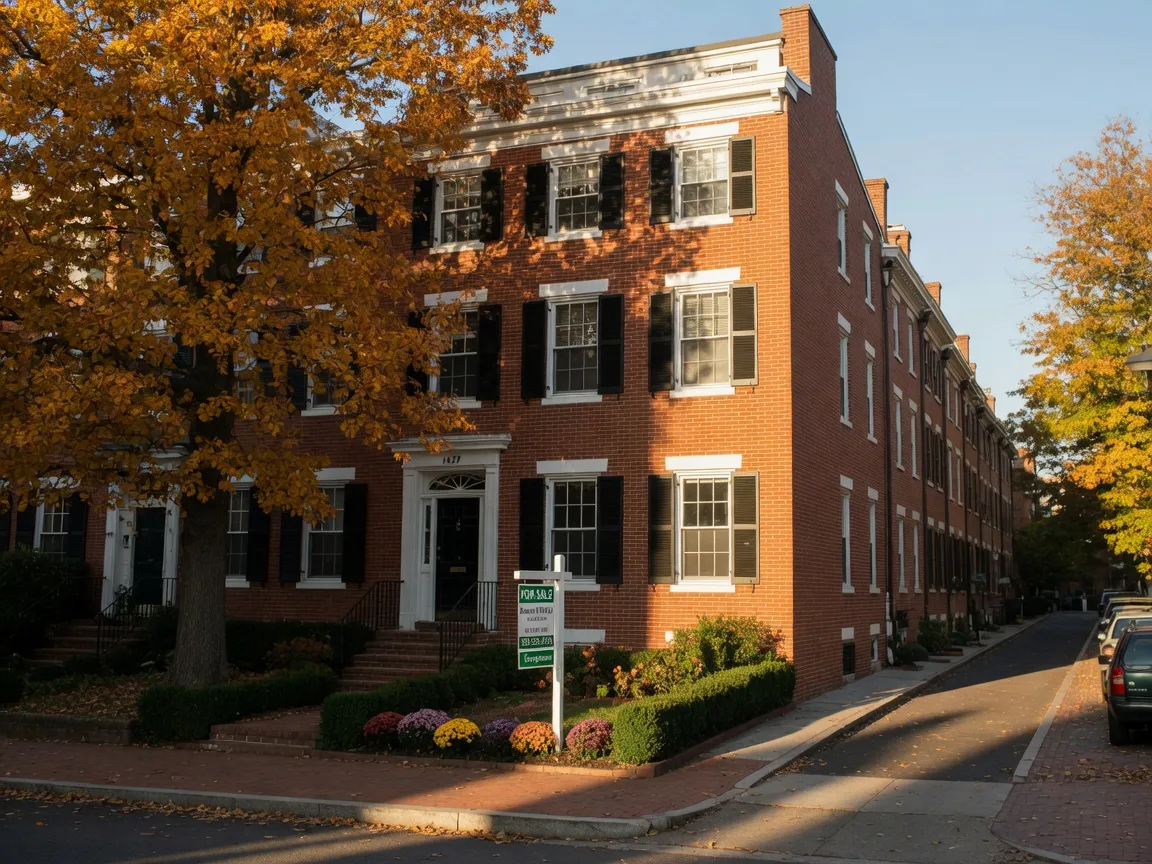
The Real Story This Year Is Inventory
Georgetown has never flooded the market, and 2026 is no different. Redfin counted about 88 Georgetown home sales over the three months ending August 2026. The Georgetowner's monthly sales report shows just six Georgetown homes closed in September 2026, about $9.3 million total. Compare that with a whole city like Fairfax, which trades hundreds of homes a month, and you see why Georgetown behaves more like a private market than a typical neighborhood market.
The thin supply cuts both ways. Sellers cannot assume the neighborhood name sells the house: there are fewer buyers shopping in this price band this fall, especially with rates near 7.3%, and an overpriced Georgetown listing can sit for months. Buyers cannot expect a deep menu to choose from. The right property may take real patience to surface, and when a well-priced home does hit the market, it can move in days.
New supply is arriving nearby, not inside the historic core. An office-to-residential conversion at 1000 and 1050 Thomas Jefferson Street NW will create about 299 apartments, and a Uniqlo flagship is planned for Georgetown Park, the kind of change that keeps the neighborhood's commercial streets active. None of it meaningfully expands the rowhouse and estate inventory that defines Georgetown resale.
Pace, Days on Market, and How Competitive the Market Really Is
Redfin rated Georgetown "somewhat competitive" at 49 out of 100 this year, a technical way of saying the market is balanced and buyer behavior decides the outcome. Average days on market was 37 over the three months ending August 2026, faster than the 42-day average a year earlier (Redfin), and Zillow clocked about 14 days to pending for well-priced homes in June.
That split is the message: a Georgetown home priced against its own block's recent sales still moves quickly, while a listing anchored to an older value sits. DC homes overall close at about 98.1% of their list price (Redfin, August 2026), so the first 10 to 14 days of a listing capture nearly all of its attention. My post on what days on market really tells you before you list explains exactly why the first two weeks decide the outcome. Fall brings a thinner crowd than spring, but the buyers who shop Georgetown in October are usually serious, often relocating on a work or school deadline.
What Georgetown Buyers Should Know This Fall
First, the financing math. At a 7.28% average 30-year rate (Freddie Mac, first week of October), a $1.7 million purchase with 20% down carries a monthly principal and interest payment near $9,400. Georgetown purchases usually require jumbo financing, which prices differently than conventional loans, so get a jumbo pre-approval before you tour seriously, and confirm the lender knows the neighborhood's appraisal patterns.
Second, expectations on the offer. In a market where most sales land within a couple of points of list price, a winning offer is usually priced at reality and supported by strong terms: a solid down payment, a tight financing contingency, and a realistic closing date. Appraisal gaps are a live issue in Georgetown precisely because comparable sales are so few. My explainer on appraisal gaps covers what they mean and how buyers handle them.
Third, patience with the list. Inventory is thin, so the single best discipline is a clear must-have list and the willingness to wait for the right block and layout. The DC Metro buying guide walks through the full process, from budget to closing, for Georgetown and everywhere else in the region.
What Georgetown Sellers Should Know This Fall
The luxury market here rewards accuracy and penalizes optimism. With only a handful of sales per month, comps are sparse, so pricing has to be built from the right comparables, not the nearest estimate. A Georgetown appraiser will walk the exact block, and a list price set against last year's high-water marks invites a long marketing period and lowball offers.
Preparation matters more than in almost any DC address. Photography, floor plans, and video walkthroughs are table stakes for out-of-state luxury buyers who tour virtually before they fly to DC. Consider a pre-listing inspection: a Georgetown buyer's inspector will find condition issues, and at this price point buyers expect a home that is either turnkey or honestly priced for its condition.
Plan the calendar in weeks, not months. A well-priced, well-presented Georgetown home typically goes under contract within three to six weeks, and the strongest offers usually arrive in the first 10 to 14 days. If the home needs work, decide whether to repair or price for it before the sign goes up. I walk sellers through every step, from comp selection to closing table, in the DC Metro selling guide.

Georgetown Block by Block
Georgetown is a neighborhood within Washington, DC, but it is not one market. It splits informally into the East Village, east of Wisconsin Avenue, and the West Village, toward the Potomac. East Village rowhouses run off M Street and the Wisconsin Avenue shops, with smaller, quieter blocks and a more residential feel. The West Village is where the waterfront, Washington Harbour, and the C&O Canal towpath live, and its prices run hottest.
Landmarks anchor the geography and the pricing: the Key Bridge at the west edge, Georgetown University above the canal, the Old Stone House on M Street, and Washington Harbour along the river. The closest rail access is Foggy Bottom Metro on the Orange, Blue, and Silver lines, about a 15-minute walk up Pennsylvania Avenue NW. ZIP 20007 covers most of the neighborhood, and DC Public Schools assign Georgetown to Key Elementary and Hardy Middle School, with many families choosing private options like Georgetown Day School and the British School of Washington.
For a fuller picture of streets, schools, parking realities, and walkability, my Georgetown neighborhood guide goes block by block, and the neighborhood's own Georgetown DC website tracks events and business news on M Street and Wisconsin Avenue.
Frequently Asked Questions
Is now a good time to buy a home in Georgetown, DC?
How much do I need to buy a home in Georgetown?
How long does it take to sell a home in Georgetown?
Is Georgetown a good investment in 2026?

Claude Labbe
Local market expert and curator · REALTOR, Douglas Elliman · DC, MD, VA
703-868-7774 | Claude.Labbe@elliman.com
Thinking about buying or selling in Georgetown? Claude has worked across Washington's most storied neighborhood for 24 years and will give you a straight read on prices, comps, and timing. Call 703-868-7774 or visit the contact page to schedule a consultation. Talk soon.
Sources
This guide draws on public data available as of October 9, 2026: Redfin's Georgetown housing market data (three months ending August 2026), Zillow's Georgetown home values (June 2026), The Georgetowner's September 2026 closed sales report, regional data from Bright MLS, and Freddie Mac's Primary Mortgage Market Survey. For official city records and school assignments, visit the District of Columbia government website.