
Key Takeaways
- Start with your commute. DC metro workers average about 34.6 minutes one-way, roughly 8 minutes longer than the national average. Metro line access should anchor your search.
- Washington DC is the walkable core (Walk Score 77) but the least space for the money, with a median home price around $747,000. It fits urbanists who do not need a car.
- Arlington is a city of about 250,000 residents with more than 30 neighborhoods, not a single neighborhood. Clarendon, Ballston, and Rosslyn pair urban walkability with top-rated schools.
- Bethesda and Chevy Chase lead for schools but carry the region's highest prices, with medians near $1.16 million to $1.26 million. Silver Spring and Rockville offer Montgomery County value at lower entry points.
- Rent before you buy if you are new to the region. A 6 to 12 month rental lets you test commutes and neighborhoods before making a purchase you will live with for years.
If you are wondering where to live in the DC metro area, start with your commute, your budget, and your schools. The region is not one market: Washington DC, Arlington, Alexandria, Bethesda, Silver Spring, and dozens of other cities, towns, and communities each trade off walkability, price, and lifestyle differently. The short version is that DC rewards urbanists, Arlington and Bethesda reward transit-rich suburbia with excellent schools, and Alexandria, Silver Spring, and Fairfax City reward buyers who want more room.
The DC metro, often called the DMV for District, Maryland, Virginia, is home to roughly 6.2 million people and one of the strongest job markets in the country. Government, tech, defense, healthcare, and law anchor the economy, and the WMATA Metro system connects nearly every community on this list to downtown Washington. This guide walks through the region area by area so you can narrow your search before you book a single tour.
What Counts as the DC Metro Area?
Three states, three entirely different tax and school systems. Understanding the distinction matters more here than almost anywhere in the country.
Washington, DC is the urban core, with about 699,000 residents and the region's most walkable streets. Maryland contributes Montgomery County and Prince George's County, with cities and communities like Bethesda, Chevy Chase, Silver Spring, Rockville, and Potomac. Virginia brings the cities of Arlington and Alexandria, plus McLean, Falls Church, and Fairfax City.
One geography note trips up newcomers: Arlington is a city of roughly 250,000 residents, not a neighborhood, and it contains more than 30 neighborhoods from Ballston and Clarendon to Pentagon City and Columbia Pike. Alexandria is an independent city, and Bethesda is a community in Montgomery County, not a neighborhood of DC. Getting these jurisdictions right is the first step to searching the right areas.
Start With Your Commute
The average one-way commute in the DC metro is about 34.6 minutes, nearly 8 minutes longer than the national average of about 26.4 minutes, according to census-derived data compiled by BestPlaces. That number shapes where people actually live.
The WMATA Metro is the backbone of the region. The Red Line serves Bethesda, Chevy Chase, Silver Spring, and Rockville. The Orange and Silver Lines serve Ballston, Clarendon, Rosslyn, Falls Church, and McLean through Tysons. The Blue and Yellow Lines connect Alexandria, Pentagon City, Crystal City, and Navy Yard. The Green Line runs up into Shaw, Columbia Heights, and Petworth. Rosslyn is one stop from Foggy Bottom, and many Arlington neighborhoods put downtown DC within a 20 minute door-to-door trip.
If you drive, budget for congestion on the 495 Beltway and the Potomac crossings, and for parking at downtown employers. Walkers and cyclists should focus on DC and the Metro-adjacent villages of Arlington and Alexandria, where a car is optional.
Washington, DC: The Walkable Urban Core
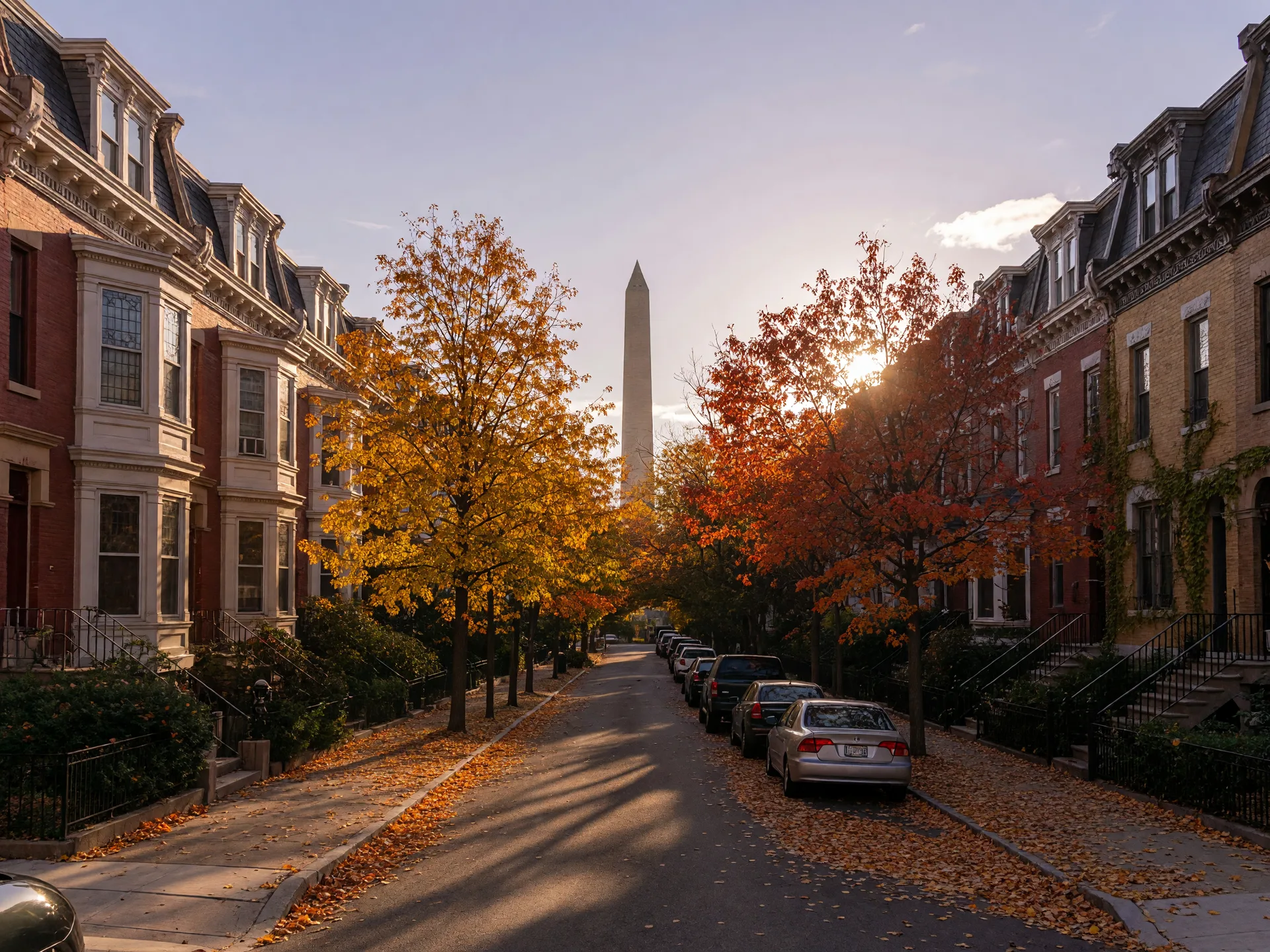
Washington DC is the most walkable option in the region, with an overall Walk Score of 77 and walkable neighborhoods like Georgetown, Capitol Hill, and Dupont Circle. Restaurants, museums, Metro stations, parks, and groceries are within walking distance in most of the city, and owning a car is genuinely optional.
The trade-off is space. The median home price in DC is roughly $747,000 (Redfin, mid-2026), and that buys less square footage than the same money in the suburbs. DC is best for renters and buyers who want urban energy, cultural life, and short trips to the office, and who are comfortable in condos, co-ops, and rowhouses rather than large single-family homes.
DC public schools vary by ward and sometimes by block, so school-bound buyers should verify the specific catchment before bidding. Private and charter options are plentiful, and the city's international schools are a draw for expat families moving to the area.
Virginia: Arlington, Alexandria, McLean, Falls Church, and Fairfax City
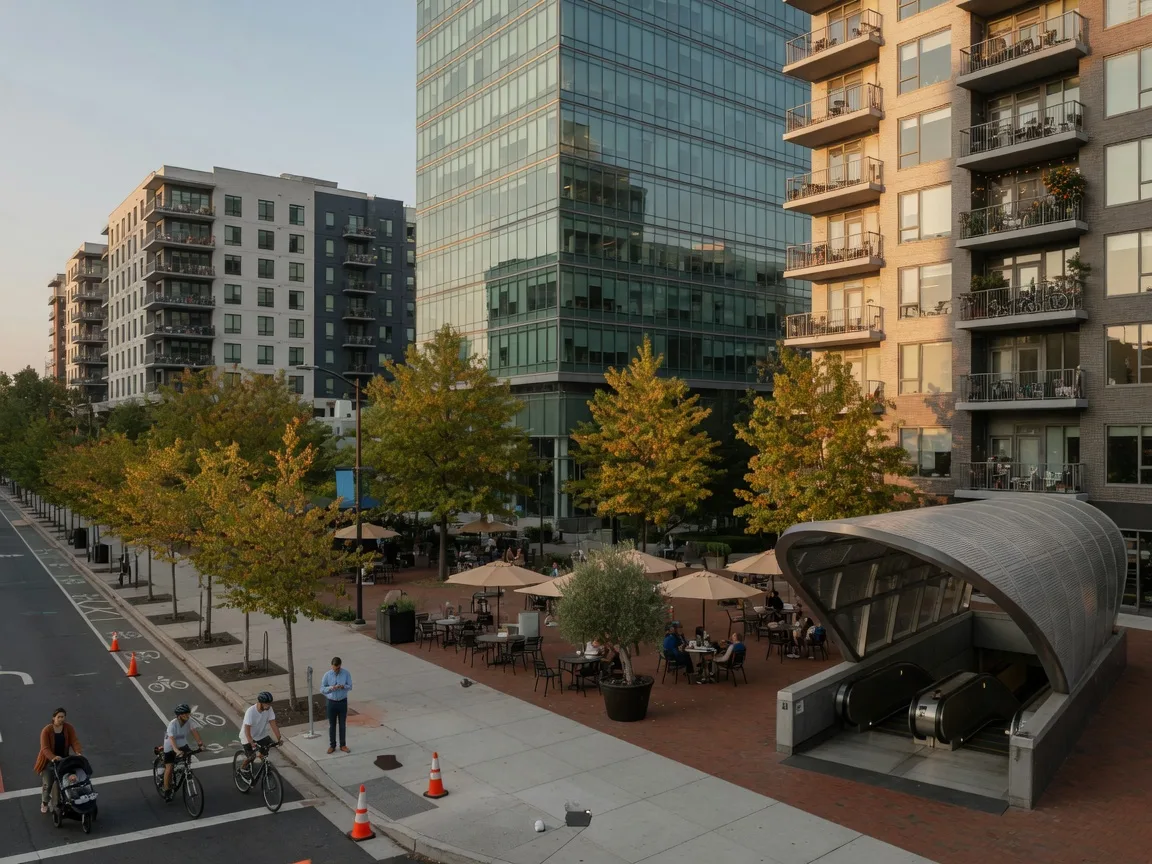
Arlington is the region's great compromise: a city of about 250,000 people that combines urban walkability with top-rated public schools. Its neighborhoods operate like distinct villages. Ballston and Clarendon are lively, walkable retail and dining centers on the Orange and Silver Lines. Rosslyn is the closest Virginia stop to downtown DC. Pentagon City and Crystal City anchor the south, next to the Pentagon and Amazon's HQ2. Columbia Pike and Shirlington offer more affordable, family-friendly corridors.
Arlington's median home price is about $818,000, up 6.4% year over year, one of the strongest appreciation stories in the region. You pay more for the address, but you get Metro access, excellent Arlington Public Schools, and short commutes. Our Arlington neighborhood guide breaks down each section of the city.
Alexandria, an independent city of about 161,000, is the region's best value in Virginia. The median home price runs $629,000 to $675,000, and Old Town's King Street corridor, waterfront parks, and historic rowhouses give it a charm no other Virginia community matches. Del Ray is the family favorite. The commute to downtown DC is longer than from Arlington but manageable on the Blue and Yellow Lines.
Farther out, McLean offers large lots and Fairfax County schools near the Silver Line, Falls Church is a small independent city with a walkable downtown and top schools, and Fairfax City delivers more space for the budget with the same Fairfax County school system. For a full market comparison of Virginia and Maryland, see our county-by-county market analysis.
Maryland: Bethesda, Chevy Chase, Silver Spring, Rockville, and Potomac
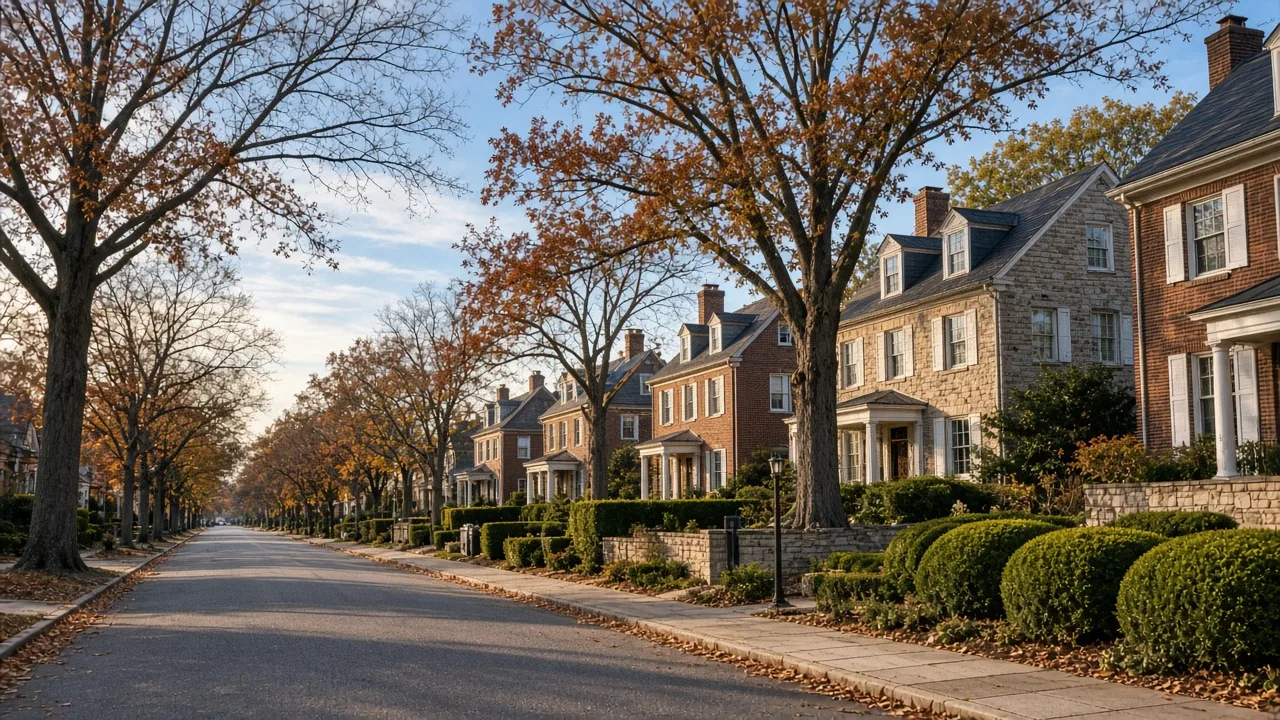
Montgomery County is where school quality meets the Red Line. Bethesda is a community of about 69,000 and the region's priciest suburb, with medians from $1.16 million to $1.26 million and access to some of the highest-rated public high schools in Maryland, including Walt Whitman and Bethesda-Chevy Chase. Its downtown around the Metro station is genuinely walkable, while the residential streets west of Wisconsin Avenue are lush and quiet.
Chevy Chase shares Bethesda's profile with a slightly different character: older housing stock, a village shopping district, and the same elite public schools. Silver Spring is the value play, an urban-suburban community on the Red Line with a median well below Bethesda's, a thriving downtown, and increasingly strong schools. Rockville, the county seat, offers more space per dollar along the Red Line, and Potomac is the acreage-and-equine-estates market at the top of the price ladder.
Maryland's taxes differ from Virginia's, and property taxes run slightly higher per $100 of assessed value in Montgomery County than in Fairfax, so budget accordingly. Maryland home sale prices have cooled modestly through 2026, giving buyers a bit more negotiating room than in DC or Arlington.
Where to Live in the DC Metro Area for Schools
If children are part of the move, the district often decides the community. Montgomery County Public Schools is the largest district in Maryland and anchors Bethesda, Chevy Chase, Silver Spring, and Rockville. Fairfax County Public Schools is the largest district in Virginia and serves McLean, Falls Church, and the Fairfax City area. Arlington Public Schools and Alexandria City Public Schools round out the Virginia side, and DC Public Schools plus the city's charters cover the District.
School assignments are set by catchment boundaries, which change. Verify the feeder pattern for the exact address before you make an offer, especially in DC, where a short street can separate two very different elementary schools.
What Does Your Budget Actually Buy?
Cost of living is the other big filter. BestPlaces puts Washington, DC's cost-of-living index around 151.9, roughly 52% above the national average, and housing is the single largest driver, with BestPlaces housing index well over twice the national figure. In practice that shows up as $1.9 million for a renovated rowhouse in Georgetown and $700,000 for a two-bedroom condo in Ballston.
Here is how current medians stack up for a quick read: Washington DC around $747,000, Arlington around $818,000, Alexandria $629,000 to $675,000, Bethesda $1.16 million to $1.26 million, and Silver Spring and Rockville below their neighbors while staying on the Red Line. Renters should expect premium prices too: market-rate two-bedrooms in the urban core run $2,400 to $3,500 a month, with more room and lower rents in Silver Spring, Falls Church, and Fairfax City.
The practical advice: set your budget from a pre-approval, not from a listings site, and let a local agent show you where your price band actually lands.
Rent First or Buy Right Away?
If you are moving to the area from out of state, my honest advice is usually to rent for 6 to 12 months. The reason is not financial, it is informational. Commutes, school fit, and neighborhood character are hard to judge from a two-day tour, and the cost of renting for a year is small next to the cost of buying the wrong home.
Buying immediately makes sense when your job location is fixed, your school priorities are clear, and you have already spent real time in the neighborhood, or when you have done a relocation here before. Buyers who arrive with a pre-approval and a clear neighborhood shortlist can move quickly in a market where good listings still go under contract in two to three weeks.
Either way, start with the full picture: our relocation guide walks through the process for new arrivals, the international buyer's guide covers the experience for newcomers from abroad, and our earlier head-to-head comparison of DC, Arlington, Alexandria, and Bethesda covers the four most popular landing spots in depth.
Your First Month in the DC Metro
Once you arrive, build a decision calendar. Ride the Metro at your actual commute time. Walk the grocery route on a Saturday. Visit shortlisted schools during drop-off. Keep a running list of what changed after each visit, because DMV neighborhoods differ block by block. The goal is a shortlist of two or three communities where you would be happy for five years, not five months.
When you are ready, a buyer's agent who knows all three jurisdictions saves you time and money, and a well-run buying process keeps you disciplined in a competitive market.
Frequently Asked Questions
Where should I live in the DC metro area if I work downtown?
Is it better to rent or buy when moving to Washington DC?
Which DC metro suburbs have the best public schools?
How long is the average commute in the DC metro?
How much more expensive is Washington DC than the national average?

Claude Labbe
REALTOR · Douglas Elliman · DC, MD, VA
Douglas Elliman, Georgetown office: 1027 33rd St NW, Washington, DC 20007
703-868-7774 | Claude.Labbe@elliman.com
Not sure where to live in the DC metro area? Claude Labbe has spent more than two decades helping buyers, sellers, and relocating professionals across DC, Maryland, and Virginia make this exact call. Call or text 703-868-7774 or visit the contact page to schedule a consultation.
Data Sources
Home price medians reflect mid-2026 figures from Redfin and prior Claude Labbe market reports on this site. Commute and cost-of-living comparisons draw on census-derived data from BestPlaces commuting data and BestPlaces cost-of-living index. Transit details are from WMATA. Population figures are estimates that vary by source and year.