Key Takeaways
- Brookland and Takoma offer the most affordable entry points for first-time buyers in DC, with condo and rowhome options frequently available under $500,000 while still providing Red Line Metro access and quiet residential streets.
- Columbia Heights combines urban energy with reasonable pricing. With a Walk Score of 94 and the Green and Yellow Line Metro at its center, this neighborhood offers the most transit-connected lifestyle for buyers who want walkability without the Dupont Circle price tag.
- Petworth is the sweet spot for young families. Average home values around $640,000 with rowhouses that offer more space than a condo, a growing restaurant scene along Upshur Street, and strong community connections make this neighborhood worth a serious look.
- DC offers multiple first-time buyer assistance programs. The DC Open Doors program provides below-market interest rates and deferred down payment assistance, making homeownership more accessible across all the neighborhoods covered in this guide.
The best neighborhoods in Washington DC for first-time home buyers in 2026 are the ones that balance affordability, transit access, and long-term value. With the citywide median home price hovering around $652,500 and inventory up roughly 33% year-over-year, this is a moment when first-time buyers have more options than they have had in years.
But more options also means more decisions. Which neighborhood fits your budget, your commute, and your lifestyle? Here is a practical breakdown of the top DC neighborhoods for first-time buyers in 2026, based on current market data and years of helping clients navigate this exact decision.
Brookland: Quiet Streets, Big Value
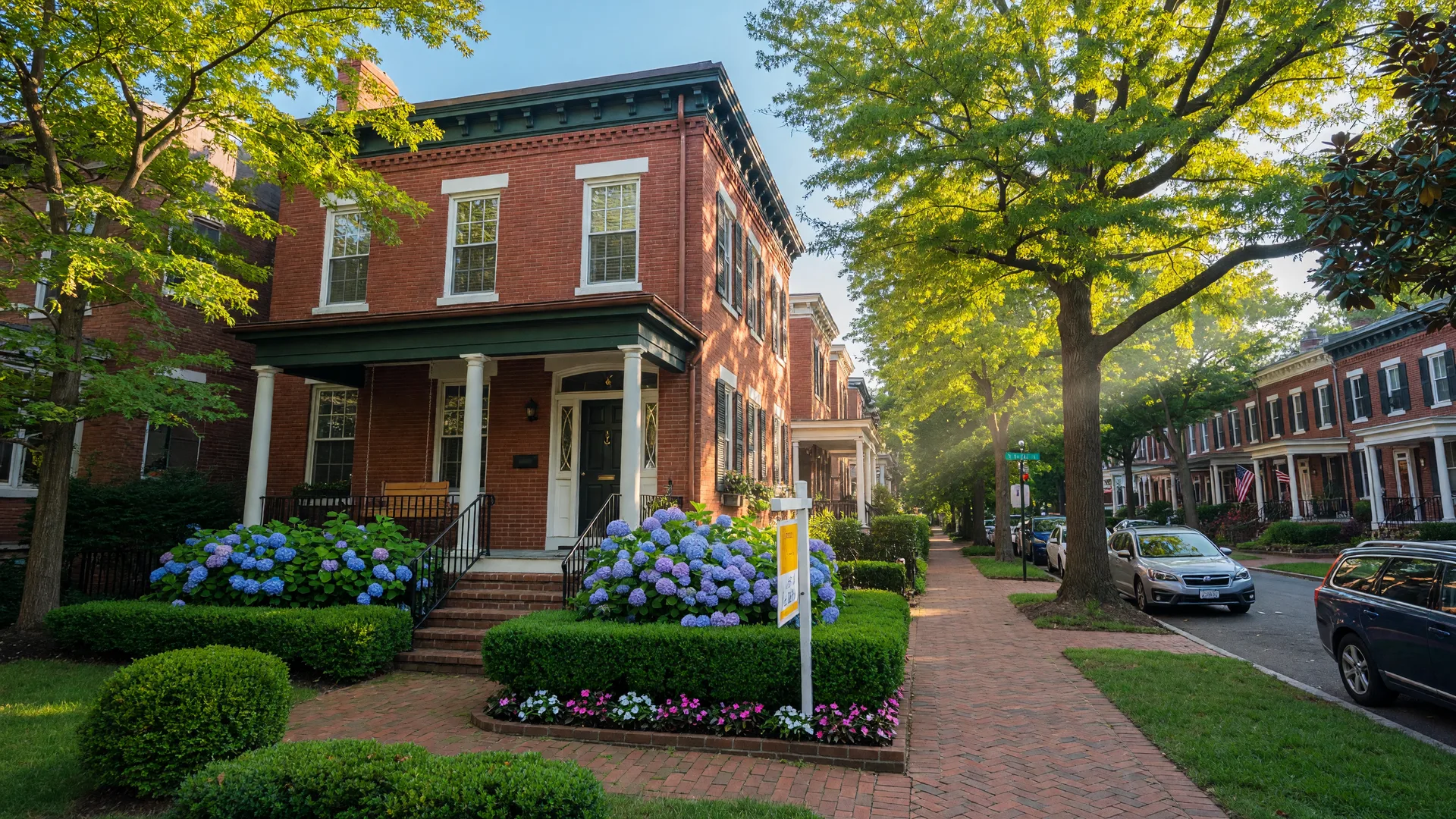
Brookland, also known as "Little Rome" for its concentration of Catholic institutions, is one of DC's most underrated neighborhoods for first-time buyers. The neighborhood offers something increasingly rare in the District: quiet, tree-lined residential streets with distinctive Victorian and Craftsman homes, a strong sense of community, and prices that still feel reasonable.
Typical home prices in Brookland range from $400,000 to $900,000, with condos and smaller rowhouses on the lower end of that spectrum. The Brookland-CUA Metro station on the Red Line puts downtown DC about 15 minutes away, making the commute surprisingly short for a neighborhood that feels so tucked away. The Brookland neighborhood guide covers the full breakdown of housing styles, transit options, and local amenities.
For first-time buyers, the biggest advantage in Brookland is the combination of affordability and space. Homes here tend to sit on larger lots than comparable properties in Northwest DC. The 12th Street NE corridor offers a handful of solid cafes and restaurants, and the Brookland Farmers Market is a weekend staple. If you want a backyard and a quiet street without leaving the city, Brookland deserves to be at the top of your list.
The trade-off: fewer dining and nightlife options than neighborhoods closer to downtown. Brookland is quiet in the evenings, and the commercial corridor is still developing. For buyers who prioritize peace over proximity to the busiest parts of the city, that is a feature, not a bug.
Columbia Heights: Urban Energy, Walkable, and Wallet-Friendly
Columbia Heights is the neighborhood for first-time buyers who want to be in the middle of it all. With a Walk Score of 94, the Columbia Heights Metro station (Green and Yellow lines) at its center, and the massive DC USA shopping complex anchoring the commercial district, this is about as connected as urban living gets in Washington.
Home prices in Columbia Heights range from approximately $400,000 to $1.1 million, with the lower end dominated by condos and co-ops. The median list price hovers around $652,000, right at the citywide average. That puts Columbia Heights in a sweet spot: you get premium transit access and walkability at a price that is significantly more accessible than nearby Dupont Circle or Adams Morgan. See the Columbia Heights neighborhood guide for specific blocks and building comparisons.
The neighborhood's housing stock is a mix of historic rowhouses, pre-war apartment buildings, and newer condo developments. First-time buyers typically target the condo market here, where one-bedroom units frequently list between $350,000 and $450,000. The trade-off for the energy and convenience is street noise and limited parking. If you plan to rely on Metro and your own two feet, Columbia Heights is an excellent choice.
Meridian Hill Park (also known as Malcolm X Park) anchors the western edge of the neighborhood with its 13-tier cascade fountain and weekly drum circle. The park alone makes Columbia Heights worth considering for buyers who want green space integrated into their daily routine.
Petworth: The Family-Friendly Frontier
Petworth has emerged as one of the most desirable neighborhoods in DC for first-time buyers who plan to stay put for a while. The average home value sits around $640,000 (Zillow, 2026), with a median sale price of approximately $725,000. That is above the citywide median, but Petworth offers something most other neighborhoods at this price point do not: rowhouses with real space, a growing restaurant corridor, and a genuinely strong community feel.
The neighborhood is centered along the Georgia Avenue and Upshur Street corridors, which have seen a steady influx of new restaurants, coffee shops, and retail over the past several years. The Petworth Metro station on the Green Line provides direct access to downtown in about 12 minutes. The Petworth neighborhood guide goes deeper into the specific blocks and home types available.
For first-time buyers, Petworth's best quality is its staying power. The homes here are not starter homes in the traditional sense. Many are three-bedroom rowhouses that can accommodate a growing family for a decade or more. If you are a first-time buyer thinking about your next five to ten years, Petworth is worth the stretch.
The main challenge for first-time buyers in Petworth is competition. Well-priced rowhouses in good condition often receive multiple offers in the first week. Being pre-approved and working with an agent who understands the local market dynamics is essential.
Takoma: Small-Town Feel, City Address
Takoma (the DC side, distinct from Takoma Park, Maryland) offers a small-town atmosphere within the District limits. The neighborhood is defined by its historic commercial district along Carroll Avenue NW, which features independent bookstores, cafes, and a co-op grocery store that serves as a community gathering spot.
Home prices in Takoma are comparable to Brookland on the affordable end, with condos and smaller homes available under $500,000. The Takoma Metro station on the Red Line provides service to downtown in roughly 20 minutes. Takoma is also one of the most walkable neighborhoods in Upper Northeast, with a Walk Score in the high 70s. The Takoma neighborhood guide has the full details on housing stock and local favorites.
For first-time buyers, Takoma's appeal is its established community character. The Takoma Park Farmers Market (technically in Maryland but steps from the DC line) is one of the best in the region. The neighborhood has a slower pace than Columbia Heights or Petworth while still offering solid transit access and a distinct identity within the city.
The trade-off: Takoma is farther from downtown than the other neighborhoods on this list, and the housing stock includes more older homes that may need updates. For buyers who value character and are willing to invest sweat equity, that can be an opportunity.
Navy Yard: New Construction for First-Time Buyers
Navy Yard is the outlier on this list. It is the only neighborhood where new construction dominates the housing stock, and the buyer profile skews toward professionals who want modern amenities and are willing to pay for them. The median home price in Navy Yard ranges from approximately $544,000 to $694,000 depending on the source and property type.
What makes Navy Yard interesting for first-time buyers is the condo market. The neighborhood has seen a wave of new condo developments with modern floor plans, in-unit laundry, gyms, and roof decks. For buyers who want move-in-ready properties with low maintenance, Navy Yard condos are a strong option. The Navy Yard neighborhood guide covers the building-by-building landscape.
The neighborhood is anchored by Nationals Park and the nearby Capitol Riverfront area, with the Navy Yard-Ballpark Metro station on the Green Line providing access to the rest of the city. The waterfront along the Anacostia River has been developed with parks, walking trails, and dining options.
The main drawback for first-time buyers: condo fees in new buildings can be significant, sometimes $400 to $700 per month depending on the amenities. Factor that into your total monthly housing cost when comparing Navy Yard to older neighborhoods with lower or no HOA fees.
First-Time Buyer Programs in DC That Actually Help
Washington DC offers some of the most generous first-time home buyer programs in the country. If you are buying your first home in the District, you should know about these programs before you start shopping.
The DC Open Doors (DCOD) program provides below-market interest rates and deferred down payment assistance loans to qualified first-time buyers. This is the most impactful program for most buyers, as it directly reduces both the upfront cost and the monthly payment. The DC4ME program offers reduced mortgage rates for DC government employees, with up to 3% down payment assistance. Fannie Mae HomeReady and Freddie Mac Home Possible are conventional loan programs that allow as little as 3% down for moderate-income buyers.
First-time buyers purchasing in DC also benefit from a transfer tax reduction of up to 50% on recordation and transfer taxes, which can save thousands at closing. For more detail on these programs and how they apply to specific neighborhoods, the complete home buying guide covers the process from pre-approval to closing.
For further reading on how the current market compares across county lines, the DMV market county-by-county analysis provides context on how DC prices stack up against Montgomery County and Fairfax County.
For a deeper look at first-time buyer strategy specifically in the District, the First-Time Home Buyer's Guide to Washington DC: 2026 covers the step-by-step process, down payment strategies, and neighborhood selection in more detail.
How to Choose the Right Neighborhood
The best neighborhood for your first home depends on three factors: your commute tolerance, your space needs, and your timeline. Here is a quick way to think about it.
If your commute to downtown DC needs to be under 20 minutes and you want maximum walkability, focus on Columbia Heights or Navy Yard. If you want a quieter lifestyle with more space and a yard, Brookland or Takoma are your best bets. If you are planning to stay in your first home for more than five years and want a neighborhood with room to grow, Petworth is the strongest long-term choice.
Whatever neighborhood you choose, the fundamentals are the same: get pre-approved early (not pre-qualified, pre-approved), know what you want to spend monthly including taxes and insurance, and work with someone who knows the specific blocks and buildings you are considering.
For more on how to evaluate a neighborhood's market health beyond just price, read what days-on-market really tells you before you list -- the same metric works in reverse when you are buying.
Frequently Asked Questions
Which neighborhood in DC is the most affordable for first-time buyers?
What down payment assistance programs are available for first-time buyers in DC?
Is now a good time to buy a first home in Washington DC?
What is the difference between pre-qualification and pre-approval?
Should I buy a condo or a rowhouse as my first home in DC?

Claude Labbe
REALTOR · Douglas Elliman · DC, MD, VA
703-868-7774 | Claude.Labbe@elliman.com
Looking for a first home in DC and not sure where to start? Call Claude Labbe at 703-868-7774 or visit the contact page to schedule a conversation. With 24 years in the DC market, Claude can help you find the right neighborhood and the right home.
Data Sources
This guide draws on market data from Zillow, Bright MLS, and first-time buyer program details from the DC Department of Housing and Community Development. Neighborhood price ranges reflect current listings and recent sales data as of August 2026.